25 Aug 26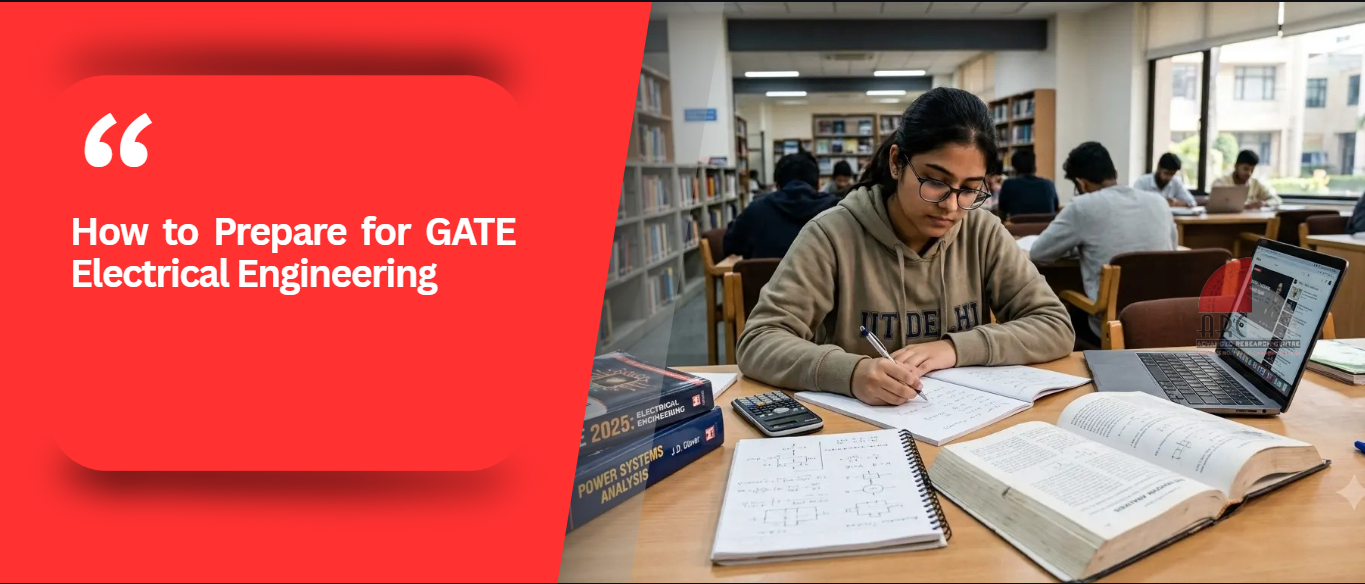
How to Prepare for GATE Electrical Engineering is the question every EEE student asks as the final year nears. The honest answer is not hard to study alone, it is with smarter planning. Your GATE score depends on understanding the GATE exam pattern, choosing the right study materials, and building speed with weekly mock tests or top GATE coaching centres in Kerala. Small details matter too: the application form, the admit card, and the examination hall routine.
Know the GATE Exam Pattern and Syllabus First
The GATE Electrical Engineering paper carries 65 questions for 100 marks, completed in three hours. Core sections include Engineering Mathematics, Electric Circuits, Electrical Machines, Power Systems, Control Systems, Power Electronics, and Signals and Systems. Around 15 marks come from General Aptitude, and Engineering Mathematics typically contributes another 13 or so marks; together, two subjects decide roughly a quarter of your paper.
Question type matters as much as topic. The paper mixes three formats:
- MCQs: one correct answer, with negative marking for wrong attempts.
- Multiple Select Questions (MSQs): one or more correct answers, with no negative marking.
- Numerical Answer Type (NAT) questions: a value you type in, with no negative marking.
Because NAT and MSQ questions carry no penalty, a calm, well-rehearsed candidate can safely attempt more of them. Read the official pattern on the GATE portal before you open a single book. The same framework applies to civil engineering, mechanical engineering, EC, and CS papers. Your first week is for syllabus mapping, not random reading.
How to Prepare for GATE Electrical Engineering in Your Final Year
Most successful candidates plan for 8 to 12 months. For most EEE students, that means starting at the beginning of the final year. ARC Foundation runs 600+ hours of classroom and online classes across this window.
- A workable three-phase plan:
- Months 1–6: Finish the syllabus subject by subject. Give high-weight subjects Electrical Machines, Power Systems, Control Systems the most time. Keep a 70–30 split: 70% of effort on heavy topics, 30% on the rest.
- Months 7–9: Solve previous-year questions topic by topic, and note every recurring concept.
- Months 10–12: Take one full-length mock every week and analyse every error.
Inside each week, keep the rhythm simple: three subjects in rotation, a fixed slot for previous-year questions, and one mock on the weekend. If you are balancing college exams in the final year, treat your GATE schedule as a non-negotiable appointment; even 90 focused minutes a day beats an eight-hour weekend cram. The same timeline works for EC aspirants, since the GATE pattern is common across papers.
- Pick Study Materials That Match the Syllabus
Depth beats breadth. Stick to one standard textbook per subject, plus GATE-specific preparation books. ARC provides exclusively prepared study materials designed around the current syllabus. Free official resources like NPTEL courses are excellent for building core concepts, especially for Electrical Machines and Power Systems where a strong visual understanding helps.
Do not collect ten books per subject that only slows revision. A single well-annotated book you can revise twice is worth more than a shelf of untouched ones. Our approach for mechanical engineering and civil engineering is identical: fewer books, deeper practice.
- Handle the Application Form and Examination Hall Details Early
Each year, students lose attempts to small administrative mistakes. File your GATE application form before the early deadline, and keep the photograph, signature, identity proof, and category certificate ready before you begin. Keep a printed copy of the admit card. Reach the examination hall at least an hour early, with the exact ID documents listed in the rules, and remember that the calculator is provided on screen, so leave the physical one at home.
Read the full GATE exam rules and regulations once, so nothing surprises you on exam day.
- Push Your GATE Score with Mock Tests and Analysis
A mock test shows what you actually know, not what you think you know. ARC students take 23 full-length online exams and 50 subjective online exams before the real attempt. After every mock, spend as long analysing errors as you spent taking the test.
Analysis should answer three questions: which subject cost you marks, whether you lost marks to silly mistakes or genuine gaps, and where you ran out of time. Keep a short error log and re-read it before the next mock. This single habit lifts your GATE score faster than any extra reading. For a deeper routine, see how to improve your GATE score with mock tests.
Error analysis after every mock beats a scattered pile of untouched material every time.
Final thoughts
Prepare early, follow the exam pattern, and treat every mock as the real exam. Map the syllabus in week one, give high-weight subjects the most time, file your application form early, and let every error log sharpen the next attempt. That is the whole system: there is no shortcut, only a routine you can sustain from the first day of the final year to the morning of the exam.
If you want faculty-guided structure, ARC Foundation has coached GATE since 2012, with a qualification rate above 90% and students placed in IITs, NITs, IISc and PSUs. Find the GATE coaching center in Kerala that fits your branch, and read our Tips to Crack the GATE Exam on Your First Attempt before you finalise your plan.
FAQ
What is the best way to prepare for the GATE EE exam?
Follow a fixed weekly timetable: rotate three subjects, practise previous-year questions daily, take one mock every weekend, and keep an honest error log. Structured coaching works because it protects this routine; that is why most of our qualifiers join a batch.
How long does it take to prepare for GATE ECE or EE?
Eight to twelve months of focused work is the standard. Starting in the final year is normal; starting earlier only helps.
Which subject carries the highest weight in GATE Electrical Engineering?
Electrical Machines, Power Systems, and Control Systems consistently carry the largest share of core marks. Alongside Engineering Mathematics and General Aptitude, which together account for roughly a quarter of the paper, these subjects decide most of your final GATE score.
Is coaching necessary to crack GATE Electrical Engineering?
Coaching is not compulsory, but structure is. A batch gives you a mapped syllabus, a fixed timetable, mock tests, and faculty who correct your errors early. If you can build all of that alone, self-study works; most students find the structure faster.
Can I prepare for GATE EE in the final year alongside college exams?
Yes. Most aspirants do exactly that. Keep a short daily slot for GATE, protect it during exams, and use weekends for mocks. Consistency across the year matters more than intensity in any single month.
 comments 0